Chopping boards and butchers’ blocks have seen overwhelming demand in recent years and sell fast! Whether using them as a steak serving board, versatile serving platter, roast carving board, charcuterie presentation or centrepiece of a kitchen or BBQ shack. The best ones are wooden, in our humble opinion. You want style while functionality to slice, dice, chop, and serve. All the while wooing.
You’ll want something that is durable and looks the best when loaded with cheese, sliced meats, and fruit or whatever your pick. Find something with high-quality design, functionality, and aesthetics. The top choice for many for serving cooked meats and sharing platters is a solid English oak board.
Making a wooden butcher’s block
Building a wooden butcher’s block is one of the most rewarding projects a woodworker can undertake. It combines artistry, precision, and functionality into a single, timeless piece. Whether crafting it for a professional kitchen or a home workspace, understanding the right wood selection, the importance of precision, and how to optimise your workshop tools will make all the difference between a mediocre result and a masterpiece that lasts generations.
Choosing the right wood is the foundation of any successful butcher’s block project. Hardwoods are the gold standard, with maple being the most popular choice for its tight grain, durability, and moisture resistance. Oak is particularly favoured for its ability to withstand repeated knife strikes without splitting.
Precision is non-negotiable when building a butcher’s block. Sanding through progressive grits, finishing at 220-grit or higher, ensures a smooth surface that accepts food-safe oil finishes evenly.
Having the right tools properly tuned makes butcher’s block construction significantly easier. A random orbital sander speeds up the finishing process, while a card scraper efficiently removes mill marks. Finally, keeping all blades and cutting edges sharp reduces tear-out and ensures clean results throughout every stage of the build.
Crafting a wooden butcher’s block demands thoughtful wood selection, unwavering precision, and well-maintained tools. By choosing quality hardwoods, measuring meticulously at every stage, and ensuring workshop equipment is properly optimised, we can produce a functional work of art that serves faithfully for decades. The investment of time and care at each step is what separates a truly exceptional butcher’s block from an ordinary one.
The best Cutting & Serving Boards
Our Chopping Block Workshop makes premium chopping boards and blocks, also known as cutting boards and butcher blocks. On the Pilgrim’s Way in Surrey, our collection features handcrafted boards in various shapes and sizes, reflecting timeless craftsmanship. Whether you’re slicing vegetables, carving meat, or serving on a beautifully crafted kitchen board, each piece is designed to combine function and style. Explore our range of food preparation boards, wooden chopping boards, and serving boards, all thoughtfully made to elevate your culinary experience. We have a particular delight in BBQ chopping and serving boards.
Please note that all sizes are approximate and may have slight variances.
The best Cutting & Serving Boards
The Best BBQ Chopping Boards for Meat Prep and Grilling. Need the best BBQ cutting board? If you are chopping brisket, sautéing ribs or handling juicy steaks, a good cutting board matters. We have wood boards with juice grooves, non-slip through sheer weight and ample width to tackle any grilling need. These boards are suitable for backyard BBQs or serious smokehouses, and they last.
Get a hardy, extra-large and solid BBQ chopping board for brisket carving, rib-grilling, and grilling outdoors. Shop the best meat cutting boards in the UK!
Make your BBQ a little bit more special with high-quality wooden chopping boards. Ideal for carving meats, these boards are big for practical uses and sturdy construction.
-
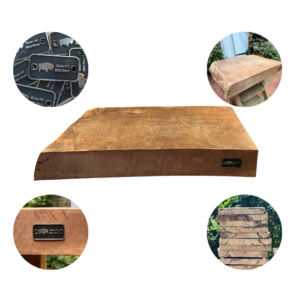 Bison Hill BBQ BlockPrice range: £99.00 through £150.00
Large Meat Cutting Boards for BBQ Chefs
Good BBQ cooks need good tools and big meat board. Our BBQ chopping boards are rugged and built for heavy-duty work, so you can cut and dice brisket, ribs, and whole chickens. Juice grooves to hold in the drippings from meat, and non-skid bases, these boards are perfect for grilling out on the open air. Choose your favourite butcher blocks, or lighter, dishwasher-safe wooden boards for your BBQ.
You want something that is chemical-free and made to last a lifetime.
Easy-to-Clean BBQ Cutting Boards for Outdoor Cooking
With our BBQ cutting boards, your BBQ dishes are prepared and cut quickly on a solid base. These boards are made for grilling pros and are great for handling raw meat, brisket, or cut vegetables. You’re in for a treat when you have these in your kitchen or near the BBQ! It takes less work to clean them and more fun with your grill, The Best Cutting Boards For Brisket And BBQ. Rugged, big, made for those grilling outside fans.
Why is a wooden cutting board is the best
Based on the discussion with experts, here are the primary reasons to use a wood cutting board:
Superior Hygiene and Antibacterial Properties
One of the most-cited reasons in the chat for choosing wood is its natural ability to inhibit bacteria. Professionals point out that while wood is porous, it actually draws bacteria down into the fibres where they are trapped and eventually die off due to the wood’s natural antimicrobial properties. In contrast, many people note that plastic boards develop deep “micro-cuts” over time that are nearly impossible to sanitise thoroughly, creating a breeding ground for bacteria that wood largely avoids.
Protection for Your Knives
Wood is the most “knife-friendly” material available. This is especially true for end-grain boards, which allow the knife blade to slide between the wood fibres rather than cutting across them. Commentators have emphasised that harder surfaces, such as glass (which some call an “abomination”) or even some hard plastics, will quickly dull expensive blades. Wood provides enough “give” to preserve the sharpness of your knives, making it the preferred choice for anyone who invests in quality kitchen cutlery.
Durability and Longevity
Many commenters share stories of wooden boards lasting for decades—some for 30 to 40 years—with minimal maintenance. Unlike plastic boards that eventually warp, stain, or become too scarred to use safely, a thick wooden board can be sanded down and refinished to look brand new. While the initial investment is higher, the “buy it for life” nature of wood makes it more economical and sustainable in the long run.
Avoidance of Microplastics
A growing concern is the ingestion of microplastics. As knives slice into plastic boards, tiny fragments can be shaved off and transferred into the food. Users advocating for wood often do so to eliminate this risk, viewing wood as a more natural and “cleaner” material for food preparation. Even though wood requires hand-washing and occasional oiling, many felt the peace of mind regarding food safety and material purity was well worth the extra effort.
Chopping Board FAQ
How Do You Maintain A Hardwood Chopping Board?
Proper maintenance is essential to extend the life of your chopping board. Here are key steps to take care of your board:
Cleaning Your Chopping Board
- Hand wash with mild soap and warm water.
- Avoid using the dishwasher to prevent warping or cracking.
- Disinfect with vinegar and baking soda for tough stains or odours.
- Dry thoroughly and air-dry upright to prevent water absorption.
Storing Your Chopping Board
- Store in a dry place away from sunlight and extreme temperatures.
- Store vertically for air circulation.
- Avoid stacking heavy items on top.
What Wood Is Best For A Chopping Board?
Hardwood options like maple, iroko, walnut, and oak are ideal for their durability and natural antibacterial properties.
Which Type of Cutting Board is the Most Hygienic?
Hardwood cutting boards are the most hygienic due to their natural antibacterial properties and dense grain, which resists bacteria.
Can You Use the Same Cutting Board for Meat and Vegetables?
It is recommended to use separate cutting boards for meat and vegetables to prevent cross-contamination and maintain food safety.
How Often Should You Oil a Hardwood Cutting Board?
Hardwood cutting boards should be oiled every 3-4 weeks to maintain their condition and prevent cracking or drying out.
Are Bamboo Cutting Boards Better for the Environment?
Bamboo cutting boards are eco-friendly and renewable, making them a sustainable choice, though they may be harder on knives.