We tested more than six BBQ aprons before we decided to make our own. That process took the better part of a month, and by the end of it we had a cupboard full of products we wouldn’t recommend to anyone and a very clear picture of exactly what was wrong with the market.
Too Thin to Do the Job
The first problem was weight. Most of what we tested was made from 4oz or 6oz cotton — fabric light enough that a fat splash from a pork shoulder at 140°C goes straight through it. That’s not a minor inconvenience. That’s a burn. A proper outdoor cook can stand at a fire for three or four hours. You need material that genuinely protects you, not fabric that gives you the feeling of protection while you’re standing in the kitchen.
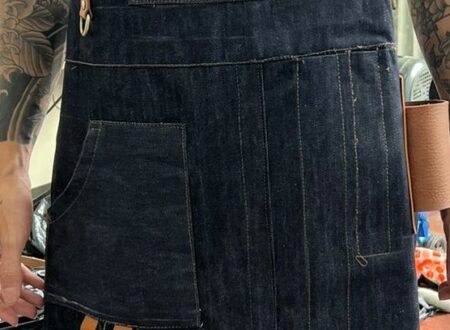
We wanted 12oz heavy denim — a weight that holds its structure, resists heat, blocks fat splash, and improves with use. It wasn’t available in any BBQ apron we could find. Not one.
Novelty Over Function
The second problem was focus. A significant portion of the BBQ apron market — particularly at the gift end — exists to carry a slogan. “King of the Grill.” “Licensed to Grill.” Variations on that theme. These aprons aren’t designed around cooking. They’re designed around a joke, and the joke stops being funny after five minutes over a real fire.
We weren’t looking for something to open presents with. We were looking for something to work in.
Kitchen Aprons Dressed Up for Outside
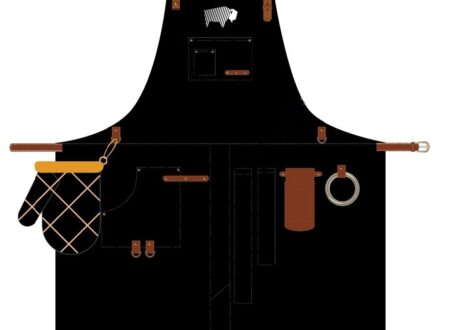
The more serious options were mostly professional kitchen aprons adapted slightly for outdoor use. Better materials in some cases, but designed for chefs standing at a counter — not cooks bent over a low grill or reaching across a wood fire. The pockets were wrong: positioned for a kitchen, sized for kitchen tools, not probe thermometers or modern smartphones. The front skirts were too short. The straps were designed for sixty minutes, not four hours.
The Decision
After six aprons and four weeks, we had our answer. The product we needed didn’t exist. We could keep adapting to tools that weren’t built for what we were doing, or we could build the right tool from scratch.
We started writing the brief the following week. Eleven months later, the result was the Gaucho BBQ Grill Apron. It took four prototypes, a Protected Design registration, and a manufacturing process built specifically around small batch UK production. None of that felt excessive once we understood how far the existing market had fallen short.