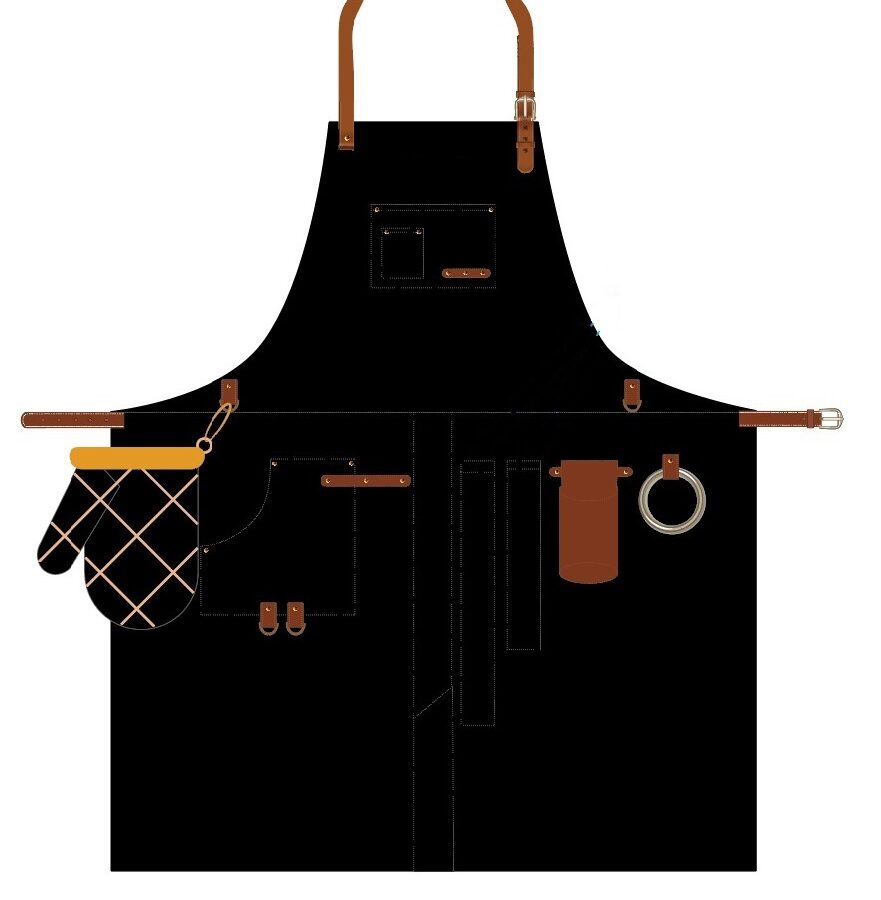
The brief was written. The material was chosen. The next step was turning twelve requirements on a page into something you could actually make. That meant sketches — not mood boards, not visual research, but working drawings that tested whether the requirements were actually compatible with each other.
The Industrial Design Process
We followed a straightforward industrial design sequence: problem, requirement, concept, prototype. The brief had defined the requirements. Concept sketches were the first attempt to solve all of them simultaneously in a single object. That’s where you discover which requirements conflict, which ones reinforce each other, and which ones you’d assumed were simple but aren’t.
The first session produced six concepts. We narrowed to two for prototyping based on one criterion: which concepts could plausibly pass all twelve requirements, not just look good on paper.
The Early Structural Decisions
Several key decisions were made at sketch stage before any fabric was cut:
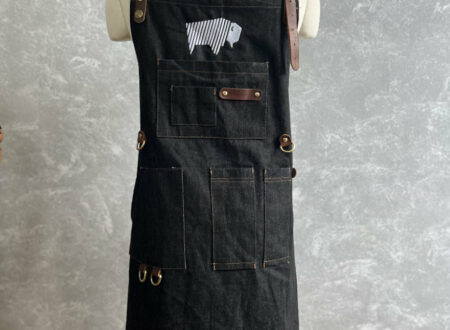
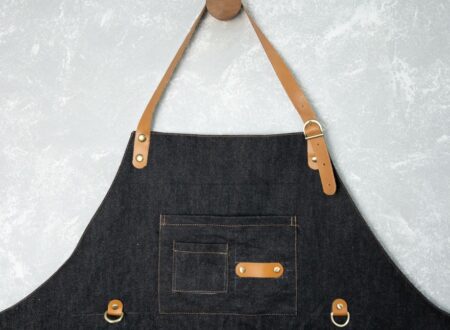
- Crossback straps instead of neck-only: A single neck strap concentrates the weight of a heavy denim apron on one point. After four hours, that becomes genuinely uncomfortable. Crossback straps distribute the load across the shoulders and upper back. This was a functional decision that also happens to be the defining visual element of the Gaucho.
- Full-length front skirt: This came directly from the brief requirement for thigh coverage when bending to a low grill. Short aprons fail this test. The full-length skirt is non-negotiable.
- Utility pockets on the body, not just the waist: Waist pockets require you to reach down and across. Chest and front-body pockets are accessible with one hand while the other is managing tools. Pocket positioning was tested against actual cooking movements at sketch stage.
- D-ring adjustment for the neck strap: A fixed-length strap doesn’t fit different body proportions. The D-ring allows continuous adjustment without additional hardware that could heat up near a fire.
Where Aesthetics and Function Converged
The interesting discovery at sketch stage was that the functional requirements and the gaucho aesthetic tradition pointed in the same direction. The crossback configuration, the full front skirt, the utilitarian hardware — these are all features of traditional gaucho working dress. Function-first design in the pampas tradition arrived at similar answers to function-first design in a Surrey workshop four hundred years later. That convergence confirmed we were on the right track.