Every Bison Hill product starts with a problem. Not a market gap identified in a spreadsheet. Not a trend picked up from a trade show. A problem we encountered at the fire — something we needed that did not exist, or existed only in a form that did not work well enough.
The Gaucho apron started this way. The tools followed the same process. This piece explains how that works in practice.
From Problem to Product — The Bison Hill Process
01
PROBLEM
can't find it
02
DESIGN
spec & materials
03
FIRE TEST
real conditions
fail ↺ redesign
04
REFINE
spec locked
05
SMALL BATCH
hand-finished UK
06
IN THE
RANGE
Step 1: The problem
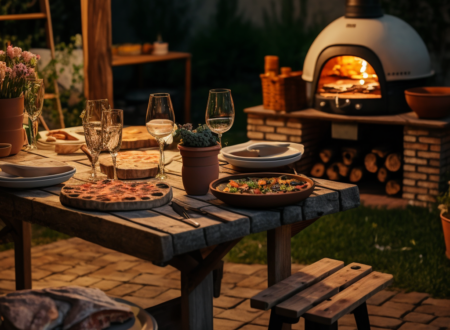
In 2022, we were cooking regularly over live fire and could not find an apron that had the right combination of features, fabric weight, and construction for serious outdoor cooking. Thin polyester aprons with one pocket were useless. Catering aprons were heavy and expensive and not designed for fire. Nothing in between did what we needed.
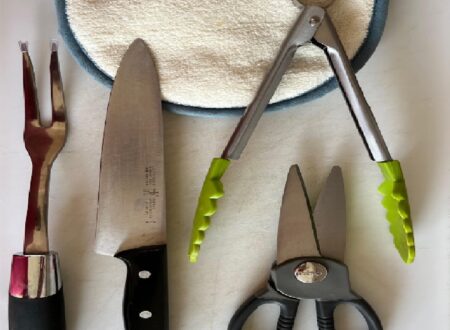
The same pattern repeated for skewers: round pins that let food spin. For grill cleaning: separate scrapers and bottle openers when one well-made tool could handle both. For the fork: lightweight tines that flexed under a full bird.
Step 2: Design and specification
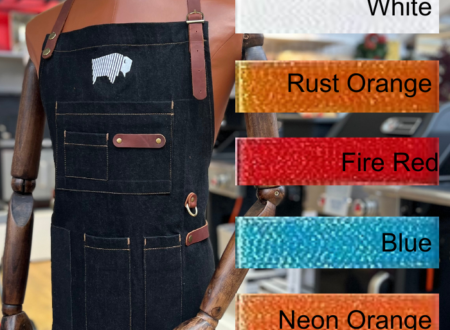
Once the problem is clearly defined, we specify a solution. What fabric? What steel grade? What dimensions? What features need to be built into the construction versus added on? For the Gaucho, this meant deciding on heavy denim, specifying the pocket depth and width, designing the knife sheaths into the side panels rather than sewn on, and working out the accessories belt configuration.
This stage produces a protected design specification — the exact construction details that become the product.
Step 3: Fire test
Prototypes go to the fire. Not to a focus group, not to a product review panel. We cook with them. A fork gets used to move a 3kg brisket. An apron gets worn through a full four-hour session in July. A skewer gets loaded, grilled, and turned fifty times.
If something fails — flexes too much, pockets too shallow, straps too short — it goes back to Step 2.
Step 4: Refinement
Most products go through two or three rounds of fire testing before the specification is locked. The Gaucho went through four. Each iteration fixed a specific problem identified in use: strap attachment reinforcement, pocket depth increase, sheath slot width adjustment.
Step 5: Small batch production
Once the specification is locked, we produce in small batches. This is not a constraint we are working against — it is a deliberate choice. Small runs mean better quality control, more considered materials sourcing, and the ability to adjust if something changes.
Step 6: Into the range
If it passes all five steps, it makes it into the range. If it does not, it does not get made. That is the only standard we hold ourselves to: does it work at the fire?
The Bison Hill Live Fire Standard
LIVE FIRE
TESTED
or it does not get made
CONTROL
grip & reach
RELIABILITY
real heat & fat
PRACTICAL
DESIGN
no add-ons
UK REALITY
damp & quick
SMALL
BATCH
quality control
KNOWN
MATERIALS
no mystery sources
Ready to upgrade your kit?