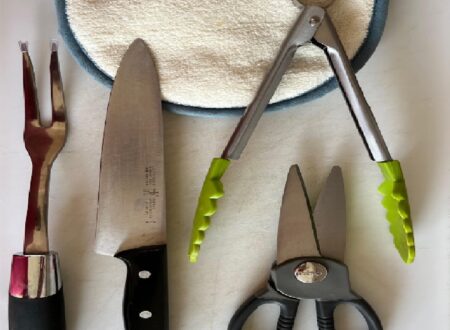

The BBQ tool set in the supermarket looks reasonable. £19.99 for a spatula, tongs, fork, and a carry case. You’ve bought it before, or something like it. And then six months later the tongs are loose at the hinge, the spatula handle has started to feel soft, and you’re looking at it again in a different supermarket wondering why you bother.
What Cheap Actually Costs
The maths on cheap BBQ tools is worse than it looks. A £20 set that lasts 18 months and gets replaced twice costs £60 over 3 years. A quality set at £60 that lasts 10 years costs £6 per year — a third of the price, with better performance across all 10 years.
But the financial cost isn’t the hidden cost. The hidden costs are:
- The cook that went wrong — because a flimsy tool let you down at the moment you needed it. A spatula that flexes under a thick steak. Tongs that grip poorly on a slippery chicken breast. A scraper that leaves wire bristles in your food.
- The cognitive load — the accumulated frustration of tools that don’t behave predictably, that require workarounds, that make you think about the tool instead of the cook.
- The waste — cheap tools are overwhelmingly single-use in terms of material value. They go in the bin. Quality tools go in a drawer for the next 10 years.
Where Quality Actually Shows Up
Quality in BBQ tools isn’t primarily about aesthetics or brand names. It shows up in three places:
Material Grade
Most budget BBQ tools are 304 stainless — a corrosion-resistant alloy that’s fine for bowls and cutlery but softer than needed for tools that scrape grates, lever caps off bottles, and live in humid conditions outdoors. Bison Hill tools use 420 stainless — the same grade as kitchen knives and surgical instruments. Harder, better edge retention, more resistant to corrosion in the specific conditions of outdoor cooking: salt, acid marinades, heat cycles, rain.
Design Purpose
Cheap tools are designed to be in a set. They’re designed to photograph well in packaging. Quality tools are designed to do one or two things exceptionally well — and every feature has a reason. The dual-tooth edge on the BBQ Blade. The barbed tip on the Bison Skewer. The 7-tine count on the King Fork. Each of these is a design decision made because it improves the actual outcome at the actual fire.
Manufacture
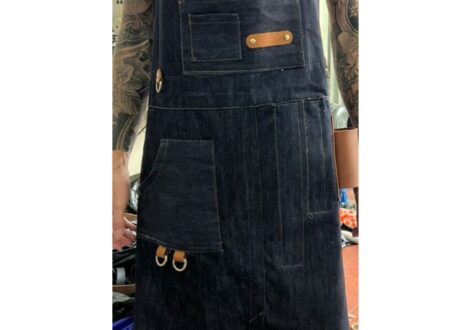
Budget tools are injection moulded or stamped at scale. Bison Hill tools are laser-cut, hand-finished, and assembled in small batches at our Reigate workshop. Every tool is tested at live fire before it’s sold. This isn’t a marketing narrative — it’s the reason we know the D-ring hook fits the Gaucho belt, the skewer tip locks meat at the right tension, and the grill scraper contacts both grate types correctly. Because we use them.
The Bison Hill Philosophy
Buy once, grill for years. It’s not a slogan — it’s the calculation we made when we started Bison Hill. We’re a small UK brand making tools in limited quantities. We can’t compete with supermarket sets on price. We don’t want to. We want to make the tools that experienced outdoor cooks reach for every time, keep in the same drawer for a decade, and genuinely miss when they’re not there.
The best compliment we receive is from customers who say they’ve stopped looking for better tools because they’ve found them. That’s the goal. Not novelty, not sets, not gimmicks. Just tools that work.