A wooden board is one of the most satisfying tools in any kitchen or outdoor cooking setup — until you neglect it. Dry, cracked, and rough within a season, it looks half its age and loses the qualities that made it worth owning. The fix is simple and takes about ten minutes. Knowing the right oil, the right technique, and how often to do it is the whole job.
This guide covers how to oil a wooden chopping board properly, which oils work well (and which to avoid), and why Danish oil in particular is the finish we use and recommend for the Bison Hill BBQ Block.
Why Oiling Matters
Wood is porous. Left untreated, it absorbs moisture unevenly — swelling when wet, contracting when dry — which leads to warping, splitting, and surface cracking. Oil fills those pores, creates a protective barrier, and keeps the wood stable through repeated washing, heat exposure, and heavy use.
For a board that lives beside the BBQ — exposed to smoke, steam, condensation, and the occasional marinade spill — this matters even more than in a standard kitchen setting. Outdoor wood needs more attention, not less.
Beyond protection, oiling maintains the surface quality that makes a good board worth using. A well-oiled board resists bacterial absorption better, cleans more easily, and holds its appearance across years of use.
Which Oil to Use on a Wooden Chopping Board
This is where most guides go wrong, and where most boards get damaged by well-meaning care. Not all oils are suitable for wood.
Danish Oil — Our First Recommendation
Danish oil is the finish we use on the Bison Hill BBQ Block, and the one we recommend for ongoing maintenance. It penetrates deeply into the grain rather than sitting on the surface as a film, which means it protects the wood from the inside out. It dries and cures properly, leaving no tacky residue, no smell, and a natural matte finish that lets the wood’s character show through.
Danish oil is a blend — typically linseed oil, tung oil, and mineral spirits — formulated specifically for raw and natural wood. The solvents carry the oil deep into the grain, where it cures (oxidises) to a hard, durable protective layer. It doesn’t peel, doesn’t crack, and doesn’t seal the surface in a way that looks artificial.
For live-edge English Oak boards like the BBQ Block, Danish oil is the right choice. Oak has a tight, defined grain and a natural tannin content — Danish oil works with those properties rather than against them. The result is a board that looks exactly like what it is: a beautiful piece of English timber, well looked after.
Food-Safe Mineral Oil
A widely used, reliable option. Colourless, odourless, and completely food-safe. Mineral oil penetrates well, doesn’t go rancid, and is easy to find. The main limitation compared to Danish oil is that it doesn’t cure — it stays as oil rather than converting to a hard finish. This means it needs more frequent re-application and doesn’t provide quite the same durability under heavy outdoor use.
Mineral oil is a good top-up option between deeper Danish oil treatments, particularly for boards used in high-humidity conditions.
Coconut Oil or Beeswax Finish
Coconut oil is often promoted as a natural food-safe alternative, and it works reasonably well for light-duty boards. Refined coconut oil is less likely to go rancid than unrefined. Beeswax blended with mineral oil is another option — it provides a degree of surface protection and conditioning in one step. Both are acceptable maintenance choices but offer less penetrating protection than Danish oil or mineral oil.
Oils to Avoid
- Olive oil, vegetable oil, and cooking oils — These go rancid inside the wood, producing unpleasant odours and eventually breaking down the surface. Never use them on a board you want to keep.
- Linseed oil (raw) — Takes extremely long to cure, stays sticky, and can harbour bacteria during the curing period. Boiled linseed oil contains driers (metallic salts) that make it unsuitable for food-contact surfaces. Danish oil, which contains linseed as one component, is a formulated product — raw linseed oil is not a substitute.
- Teak oil — Contains solvents and compounds that aren’t food-safe. Fine for garden furniture, not for a surface you carve meat on.
How to Oil a Wooden Chopping Board: Step by Step
What You Need
- Danish oil (for initial conditioning and periodic retreatment) or food-grade mineral oil (for maintenance)
- Clean lint-free cloths or paper kitchen towel
- Fine sandpaper (220-grit) if the surface has roughened
- Warm water and mild dish soap for pre-cleaning
Step 1 — Clean and Dry the Board
Wash the board with warm water and a small amount of dish soap. Scrub any food residue from the surface. Rinse thoroughly and dry with a clean cloth, then leave the board to air dry fully — ideally overnight. Do not oil a damp board. Moisture trapped under the oil layer prevents proper penetration and can cause mould.
Step 2 — Sand if Needed
If the surface has raised grain — common after the first wash of a new board or after a period of neglect — go over it lightly with 220-grit sandpaper in the direction of the grain. Wipe away any dust. This step is only needed when the surface feels rough; skip it if the board is in good condition.
Step 3 — Apply the Oil
Pour a small amount of Danish oil onto the surface. Using a lint-free cloth, rub it into the wood in circular motions, working across the entire surface including the edges and the underside. For a new board or one that hasn’t been oiled in a long time, be generous — the dry wood will drink it in.
Leave the oil to penetrate for 20–30 minutes. You’ll see the surface become more saturated as the oil soaks in.
Step 4 — Wipe Off the Excess
Using a clean, dry cloth, wipe away any oil that remains on the surface. This is important: excess Danish oil left to dry on the surface will become tacky and unpleasant. The board should feel conditioned but not wet or sticky after wiping.
Step 5 — Cure Time
Leave the board to cure for at least 24 hours before use. Ideally, repeat the process two to three times in the first few days for a new or very dry board — this builds up the protection properly. Subsequent treatments, once every few months in normal use, require just a single application.
Step 6 — For Sides and Feet
Don’t forget the underside and any feet or rubber pads. Oil wicks through wood — the underside absorbs moisture just as readily as the surface. An evenly treated board stays stable; one oiled only on top is more likely to warp over time.
How Often Should You Oil a Wooden Chopping Board?
A simple test: sprinkle a few drops of water on the surface. If they bead up and sit on top, the board is well protected. If they soak in quickly, it’s time to re-oil.
As a rough guide for a board in regular use:
- New board — Oil 2–3 times in the first week before first use
- First year — Monthly or every 6–8 weeks
- Ongoing — Every 3–4 months, or when the water-bead test shows it’s needed
- After heavy use or extended outdoor exposure — Treat on sight rather than waiting for the schedule
The Bison Hill BBQ Block — What We Use and Why
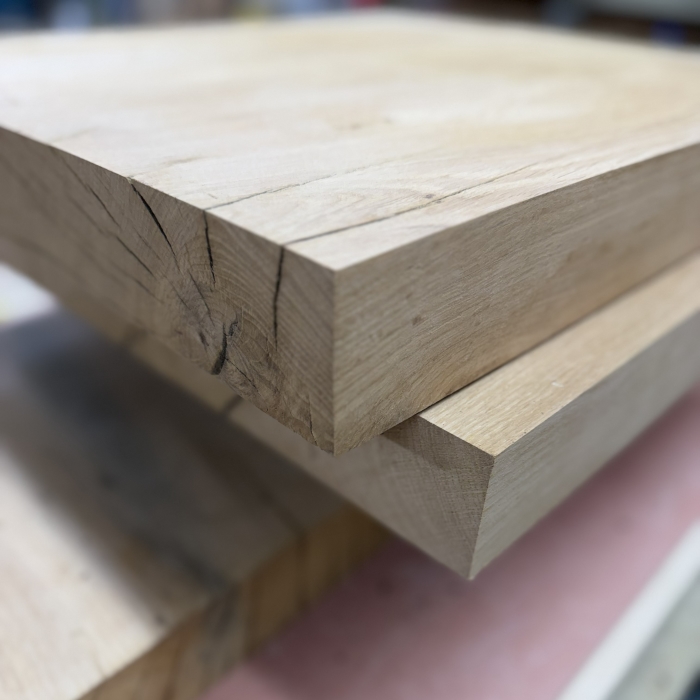
The Bison Hill BBQ Block is handcrafted from English Oak — sustainably sourced, live-edge, each piece unique. We use Danish oil on every board before it leaves us. It’s the oil that works best with English Oak’s grain structure and tannin content, providing a deep, cured protection that holds up to the demands of live-fire cooking.
English Oak is a dense, close-grained hardwood — one of the best materials available for a board that will genuinely last. The live-edge format means each piece carries its natural shape, including the organic edge profile that makes it as much a presentation surface as a functional board. The process behind each BBQ Block reflects the same approach as everything else we make: material quality first, no shortcuts.
We source the oak carefully — English Oak from British forests, processed and finished in the UK. The grain varies from piece to piece. The knots, figuring, and edge profile are part of what the board is, not defects to be engineered away.
When you receive a BBQ Block, it’s already conditioned. Your job is to maintain it — a few minutes with Danish oil, every few months, and it will look better at five years than it did at unboxing.
Caring for Your Board Between Oiling
Good daily habits extend the time between oil treatments and protect the work you’ve already done:
- Wash by hand — Never put a wooden board in the dishwasher. The sustained high heat and moisture warps and splits wood quickly. A scrub with warm soapy water and a rinse is all it needs.
- Dry upright or flat, never on a wet surface — Stand the board on its edge or elevate it so air can circulate underneath. Leaving a wet board flat traps moisture and leads to mould.
- Keep away from sustained heat sources — Don’t leave a wooden board directly beside a hot grill or in direct sun for extended periods. The rapid drying causes surface cracking.
- Remove smells naturally — If the board picks up strong odours (garlic, fish, smoke), rub the surface with half a lemon and a small amount of coarse salt. Leave for a few minutes, rinse, and dry. No chemicals needed.
- Re-oil after any deep clean — If you ever need to sanitise the board more thoroughly, re-oil it afterwards. Any strong cleaning process strips the existing oil layer.
Frequently Asked Questions
Can I use Danish oil on any wooden chopping board?
Danish oil works well on most hardwood boards — oak, walnut, maple, cherry, teak. It’s the finish we use on the English Oak BBQ Block and the one we recommend for ongoing care. Avoid using it on very soft or porous woods where the solvents may penetrate unevenly, and always allow full cure time before food contact.
How long does Danish oil take to dry?
Excess oil should be wiped off after 20–30 minutes. The remaining oil in the wood cures over 24 hours. Allow a full day before using the board after treatment. If you’re doing multiple coats (recommended for a new board), apply each one after the previous has fully cured.
What makes the Bison Hill BBQ Block different from a standard chopping board?
The BBQ Block is live-edge English Oak — each one a unique piece cut from a single trunk section, shaped and finished by hand. The natural edge profile, the grain variation, the weight and density of the oak — these aren’t features you can mass-produce. What makes a great chopping board comes down to material and craft, and both are present here. It functions as a carving surface, a serving platter, and a centrepiece of the outdoor table in one.
