The UK has a problem with seasonal grilling. The sun appears in May, everyone buys charcoal and disposable grills, and by October the grill is under a cover and the coals are forgotten until the following Bank Holiday. This is a waste of six good months of cooking.
Live fire cooking in the UK is genuinely a year-round activity with the right approach. Here is how to adapt across the seasons.
Spring (March–May): Get back to temperature
Spring grilling in the UK means variable weather — warm afternoons, cold evenings, occasional rain. The priority is getting the grill back up to temperature after winter storage. Clean the grate thoroughly (the BBQ Blade does this well), check that vents are clear, and do a first burn with cheap fuel before cooking anything you care about.
Spring is lamb season. Spatchcocked lamb leg over live fire with rosemary and garlic is the right cook for a March afternoon when the sun comes out. Asparagus over the coals is one of the best vegetables you can make on a grill — a minute a side, nothing else.
Summer (June–August): Peak season, manage the heat
Summer grilling is self-explanatory — the challenge is managing a fire in high ambient temperatures. Coals run hotter, the grill surface holds temperature longer, and the risk of flare-ups increases with the fat load from summer meats.
The two-zone setup is critical in summer. Keep the indirect zone clear and use it aggressively. Anything thicker than 3cm needs time on the indirect side before finishing on direct heat.
Summer is peak skewer season. Lamb kofta, chicken thigh, halloumi, padron peppers — the Trio Skewer set covers a full table without multiple trips back to reload.
Autumn (September–November): Longer cooks, better smoke
Cooler ambient temperatures mean the fire burns slower, smoke holds in the grill longer, and the conditions are actually better for longer cooks — brisket, pork shoulder, whole duck. Autumn is the best season for anyone who wants to try low-and-slow for the first time.
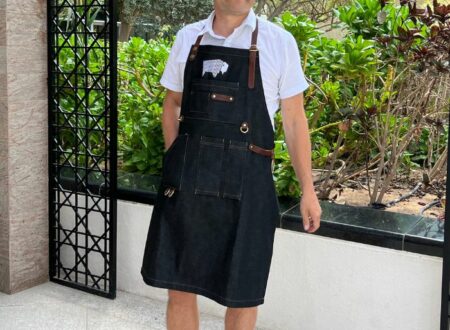
Layer up. An apron over a fleece works well. The Gaucho is designed to be worn over other layers without restricting movement.
Winter (December–February): Fire for warmth and food
Winter live fire cooking is not common in the UK but it should be. The grill becomes a heat source as much as a cooking tool. Coals need more airflow in cold air, so open vents wider than you would in summer and use slightly more fuel.
Winter cuts — short rib, bone-in pork collar, venison haunch — respond well to live fire. The cold keeps them firm during prep, and the fire does the rest. Serve with bread and a fire to stand around, and a February grill session becomes one of the best of the year.
Ready to upgrade your kit?