
In Madeira, they’ve been cooking beef on skewers over bay wood fires for centuries. The method is called Espetada — and while it’s barely known outside Portugal, it produces some of the most flavourful, juiciest beef you can cook over an open fire. It also requires almost no equipment, almost no preparation time, and works perfectly on any charcoal grill you already own.
What Espetada Actually Is
At its core, Espetada is large chunks of beef — typically rump or sirloin — threaded onto a skewer with fresh bay leaves between pieces, seasoned with coarse salt and garlic, and cooked over intense direct heat. The bay leaves char against the meat as it cooks, infusing a subtle menthol-smoke note that can’t be replicated with dried herbs or any other method.
Traditionally the skewers are hung vertically over the fire, with the meat dripping down onto a plate of bolo do caco (a Madeiran sweet potato flatbread) below. The drips season the bread. Nothing is wasted. The presentation — a long skewer hung from a hook at the table, spinning gently — is as theatrical as any cook you’ll put on.
Why the Skewer Design Matters Here
Espetada uses large, heavy pieces of beef — typically 5–6cm cubes. These need a skewer that can hold weight without the food sliding, and that controls rotation so you cook all four sides of each cube evenly. This is precisely where flat skewers with barbed tips earn their keep.
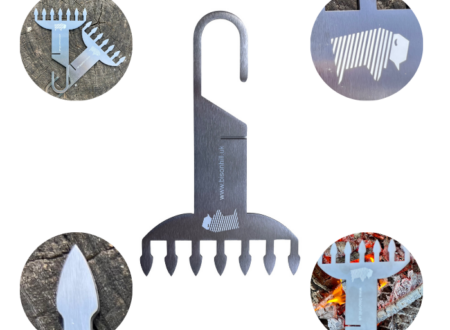
The Bison Skewer’s barbed arrowhead tip locks meat in position from the start of threading to the end of the cook. The 14-tine flat profile means a 200g cube of sirloin turns when you turn the skewer — not 2 seconds after, not at all. You know exactly what angle each piece is at relative to the coals at every moment.
For a traditional horizontal cook, this gives you perfect char on all four sides of each cube. For a vertical cook (if you have a way to hang the skewer), it lets the meat rotate slowly on its own axis as it loses fat, giving an even baste with every rotation.
How to Cook Espetada in a British Garden
You don’t need Madeiran bay wood or a traditional laureiro post. Here’s what you actually need:
- Beef: Rump, sirloin or picanha cut into 5cm cubes. Aim for 200–250g of beef per skewer for a main course.
- Bay leaves: Fresh if possible (the flavour difference over dried is significant). One leaf between each cube.
- Seasoning: Coarse sea salt and minced garlic only. No marinade needed. Don’t overcomplicate this.
- Fire: Direct, intense charcoal heat. This isn’t a low-and-slow cook — you want high heat and a relatively fast cook (12–15 minutes total, turning every 3 minutes).
- Flatbread: Place a flatbread or thick slice of sourdough below the skewer while it cooks. The drips are the seasoning.
The Vertical Serve
If you want to do this properly, hang the skewer vertically at the table after cooking. You can make a simple hook from a piece of steel rod bent over a joist, or use a purpose-made skewer stand. The meat stays warm, the juices continue to drip, and the visual impact of a 50cm skewer of charred beef arriving vertically at the table is something your guests will talk about.
The Bison Skewer’s D-ring hook makes it easy to hang — from a hook on a post, from a beam in a pergola, or from a purpose-built stand. This is one of the reasons the hook is designed into every Bison Hill tool: the grill doesn’t have to be the last place food is at height.
One Recipe. Maximum Impact.
Espetada is the kind of cook that looks complicated but takes 20 minutes to prepare and delivers results that make people genuinely ask what you did differently. The answer — large beef, fresh bay, flat skewers, direct heat — is simple enough to write on a beer mat. Try it once and it earns a permanent place in your rotation.