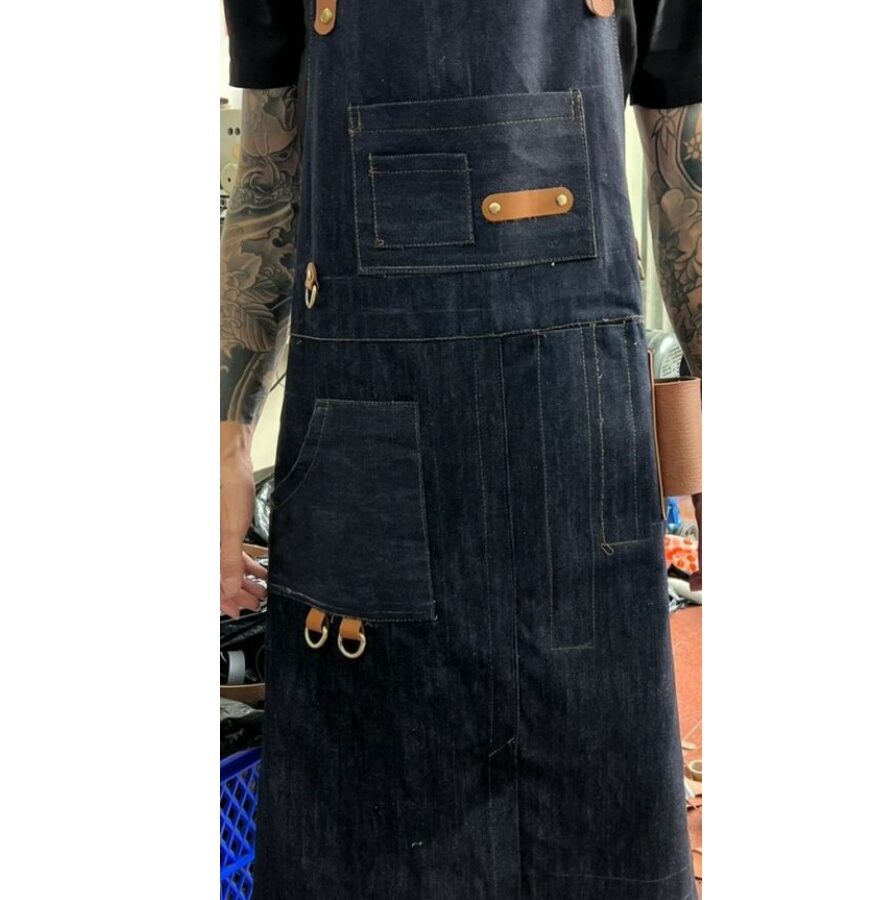
The vast majority of BBQ aprons in the UK market originate from one of two places: professional kitchen apron designs adapted for outdoor use, or novelty gift products that happen to be shaped like aprons. Neither category was designed for live-fire outdoor cooking, and that shows in how they perform when you actually use them.
The Kitchen Apron Problem
Professional kitchen aprons are well-designed objects for their intended environment. They work for chefs standing at a counter in a temperature-controlled indoor space, moving between tasks with dry hands and predictable tool sets. That environment is nothing like an outdoor fire cook.
The specific failure modes when a kitchen apron is used at a live fire are consistent and predictable:
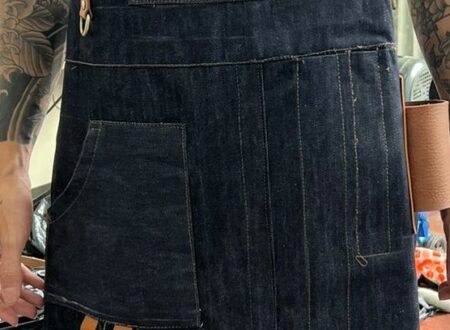
- Cotton that scorches: Standard cotton kitchen aprons are not designed for sustained radiant heat from below. They work fine in a kitchen where heat comes from controlled sources at managed temperatures. At a live fire, sustained heat exposure from a lower angle will scorch lighter cotton. 12oz heavy denim handles this differently.
- Pockets designed for kitchen tools: A kitchen apron pocket is sized for a side towel, a pen, or a prep tool. It’s not designed for a probe thermometer, which needs a vertical narrow pocket, or a modern smartphone, which needs a wide flat pocket positioned for one-handed access. These sound like minor details. They matter enormously at the fire when your hands are occupied.
- Short fronts: Kitchen aprons often end at mid-thigh because a chef is standing upright at a counter. At a live fire, you’re bending to a low grill, crouching to manage coals, or reaching across a large cooking surface. A short front apron leaves your thighs exposed in all of these positions. Full-length coverage is a live-fire requirement, not an aesthetic preference.
Designing for Fire, Not Photography
The other issue is that many BBQ aprons are designed for product photography rather than for use. They look excellent in a studio. The hardware is photogenic. The proportions are balanced for a five-foot-ten model standing upright. None of that translates to four hours at a fire in mixed weather conditions.
Designing for live fire means designing for: sustained heat from variable angles, unpredictable fat and liquid splash, outdoor temperatures and weather, tools and equipment that don’t stay still, and a cook who is moving continuously throughout a long session.
That’s a fundamentally different brief from a kitchen apron, and it produces a fundamentally different product. The Gaucho BBQ Grill Apron was designed entirely around the second brief, which is why it looks and performs differently from everything else in the market.