Every Bison Hill gift set starts with a question: what does this person need to have a complete session? Not what sounds good on a product page. Not what fills the box. What does the cook actually need for the specific occasion the set is designed around?
That question — answered honestly — is what separates a useful gift set from a padded bundle.
The Design Process
The process runs in four steps. Identify the occasion or the person. Ask the session question. Build the set around the answer. Price it so the bundle represents genuine value versus buying separately.
Take the Starter Griller Set (£20). The occasion: a gift for someone new to serious outdoor cooking, under £25. The session question: what does a beginner cook need first? Answer: a tool that cleans the grate and a tool that threads kebabs without them spinning. The BBQ Blade and the Bison Skewer. Two specific frustrations solved. Nothing else in the box.
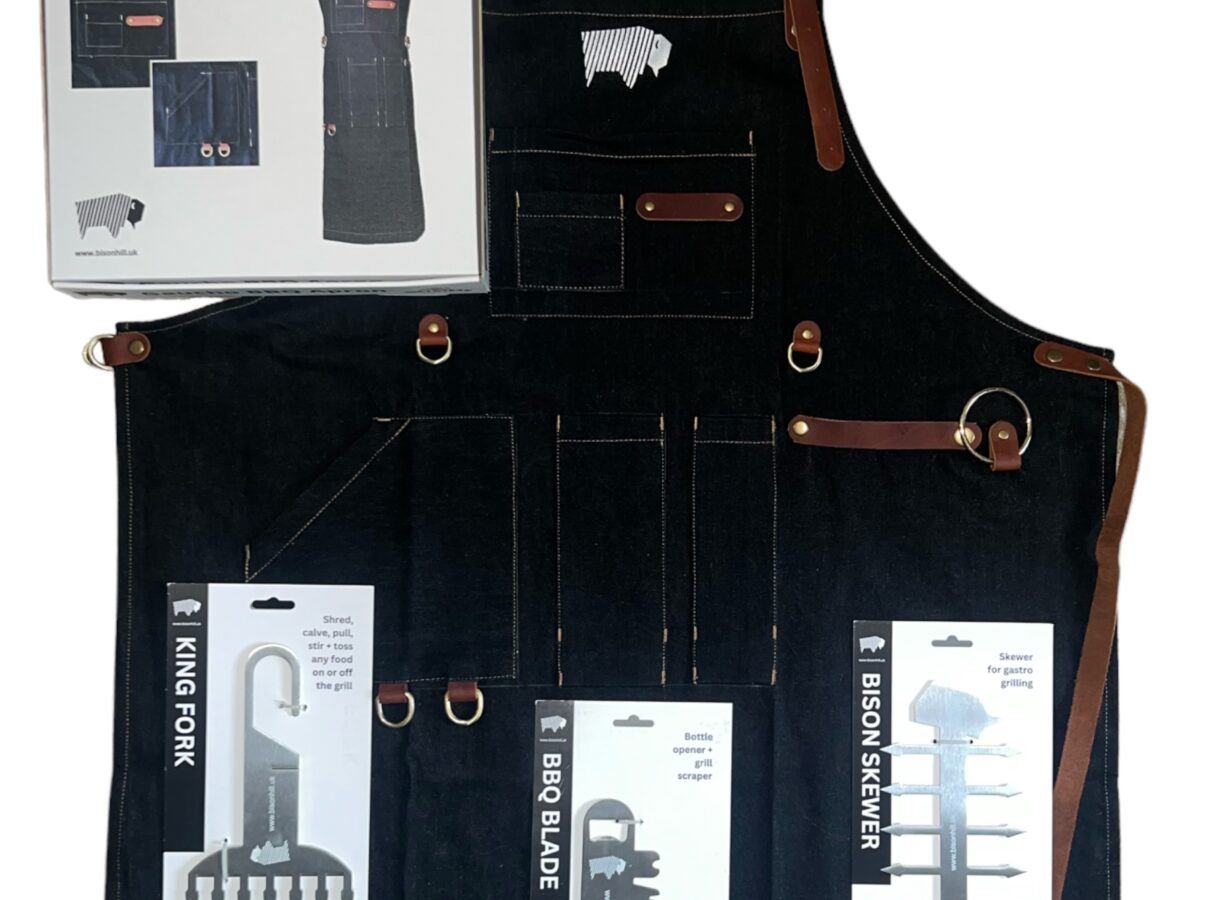
Take the Pitmaster Set (£130). The occasion: a serious cook, milestone gift, the person who already has some kit but hasn’t got a matched set. The session question: what does a full session look like for someone cooking at this level? Answer: apron for the day, King Fork for the large cuts, four Bison Skewers for a family cook, two BBQ Blades — one for grate maintenance, one kept clean for serving. Complete. Nothing redundant.
What Doesn’t Make the Cut
Two rules eliminate anything that shouldn’t be in a set. First: if it feels padded — if it’s in the box to make the set look bigger rather than to serve the cook — it comes out. Second: if the items don’t work together, if they’re not all things the recipient will actually use in a realistic session, they don’t belong in the same set.
The result is sets that tell a complete story. When someone gives the Kebab Night Set, they’re giving everything needed for one specific occasion. When someone gives the BBQ Host Gift Set, they’re equipping a cook who feeds others. The occasion is in the set. That’s what makes it a gift rather than a bundle.