
July and August 2024 were the most demanding eight weeks the Bison Hill Grill has seen. Multiple events per week at several points across the summer, a team of four running entirely on Bison Hill kit, and a range of occasions that tested every product in a way that a single cook or a controlled session never could.
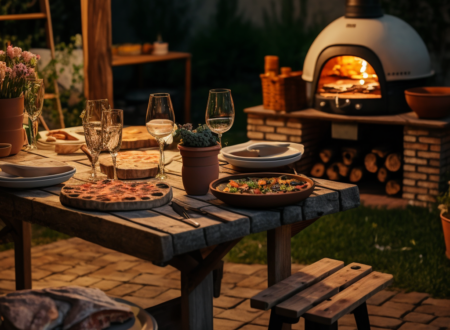
The events ranged from private garden parties in Surrey to a corporate team day — the kind of setting where everything has to look considered as well as function properly — to a birthday weekend in Sussex where the cooking ran across two full days. Different formats, different guests, different expectations. The kit had to meet all of them.
What the Kit Showed Us
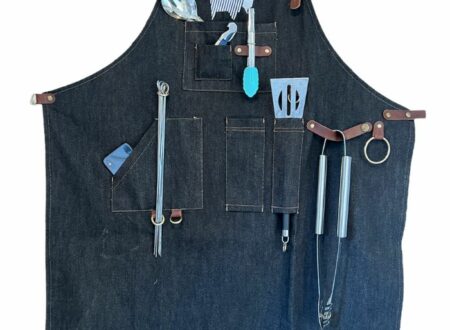
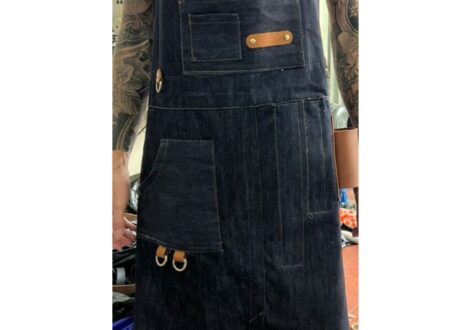
Across every event, three things stood out as consistent. First: the Gaucho apron handled full-day use in summer heat without complaint. We had team members cooking in direct sun for six-plus hours. The 12oz heavy denim is not the obvious choice in warm weather, but the weight is there because it works — the protection doesn’t come in lighter versions. Nobody reached for a replacement. Second: the King Fork handled every load put in front of it across the entire summer without flexing or failing. It doesn’t look heavy duty — it is. Third: the BBQ Block became the most photographed element of our setup at every single event. Guests gravitated to it for serving, for display, for photographs. Event clients asked about it specifically. One asked if they could keep it.
The Real Operational Challenge
The biggest challenge across the summer wasn’t the heat or the hours — it was managing fire across multiple cooking stations simultaneously. Live-fire catering is an energy management problem as much as a cooking problem. You have to read the fire arc across a four-to-six-hour event, anticipate where heat will drop, plan fuel additions ahead of when they’re needed. The summer gave us dozens of repetitions of that problem, across different setups, in different conditions.
This period produced more product knowledge than any other eight-week window in Bison Hill‘s history. Not from a test bench, not from a single cook — from real events, real loads, real conditions, real feedback from the team using the kit at pace. That’s what the Live Fire Standard means to us. Not a certification we claim. A process we run continuously.
The summer confirmed what we already believed: kit that’s designed for this use case behaves differently under pressure from kit that isn’t. Every event in July and August of 2024 demonstrated that gap.