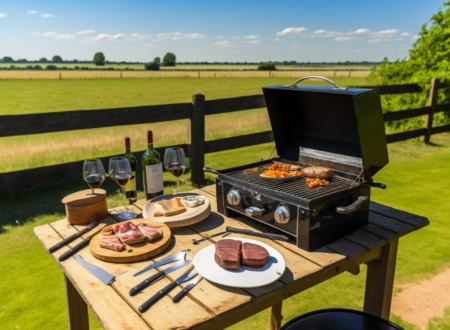

The first proper live-fire test of Gaucho prototype one was a brisket cook: 3.5 hours at temperature, proper fire management, the full range of movements a long cook involves. Not a studio test or a controlled assessment. A real cook with real food in real conditions.
What Held Up
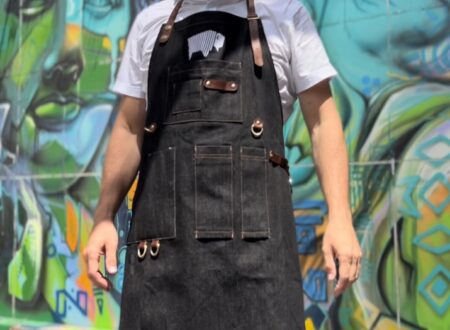
The denim protection was exceptional and immediately obvious. Brisket at temperature produces sustained fat splash and radiant heat; the 12oz denim handled both without any degradation in the fabric. This was the primary functional requirement and it was met completely in the first test.
The crossback strap configuration was validated. Over 3.5 hours, the weight of the apron — heavier than most alternatives — was distributed across the shoulders in a way that didn’t create fatigue or discomfort. A neck-only strap at this weight would have been painful within an hour. The crossback design proved the decision made at sketch stage.
Front pocket placement was exactly right. The phone pocket, the thermometer pocket, the tool loops — all accessible in the positions and orientations we’d specified. Reaching for the probe thermometer without putting down tongs is the kind of thing you can only properly test at the fire, and it worked as designed.
What Failed
The strap buckle scratched the inner forearm when reaching across the grill at certain angles — a geometry issue with the specific hardware used rather than a fundamental strap design problem. The bottle opener was positioned too high on the front body for comfortable single-handed use while wearing oven gloves. The towel ring placement at the waist was functional but awkward — accessible only with a specific wrist angle.
The Test Report
We wrote up a full test report immediately after the cook while the details were fresh. The document recorded what worked, what failed, and the specific change required for each failure point. This is the discipline that makes prototype iteration useful rather than just iterative: precise documentation of failure modes, not general impressions.
The fundamental design was validated in the first fire test. The issues that remained were all execution details: hardware specifications, positioning adjustments, dimension changes. The concept was right. The work for prototype two was specific and bounded. That’s the best outcome a first fire test can give you.